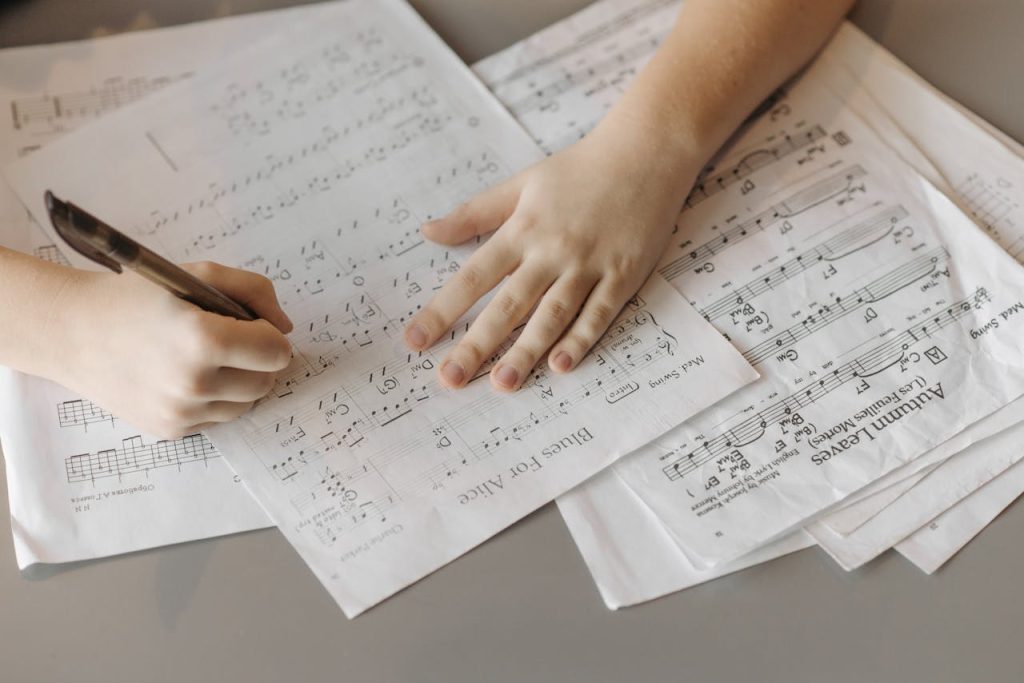
One of the biggest misconceptions about learning music is that experienced musicians are constantly counting “1, 2, 3, 4” in their heads. While counting is an essential skill in the beginning, it isn’t the final destination—it’s simply the training wheels.
Think about learning to ride a bicycle. At first, every movement requires conscious effort. You focus on balancing, steering, and pedaling all at once. Eventually, those individual actions become automatic, allowing you to enjoy the ride instead of thinking about every detail.
Rhythm works the same way.
When students first start piano lessons, I encourage them to count out loud. It helps build an understanding of note values, rests, and steady tempo. But over time, something interesting happens. The beat becomes internal. Instead of counting every note, students begin to feel the pulse naturally.
This is what musicians call having good internal time.
Professional pianists don’t perform complicated pieces by mentally reciting numbers from beginning to end. Instead, years of practice allow them to recognize rhythmic patterns almost instantly. Their brain starts thinking in larger musical phrases rather than individual beats.
That’s why rhythm exercises are so valuable.
Clapping rhythms, tapping with a metronome, and speaking note values may seem simple, but they’re strengthening the musical “clock” inside your brain. The stronger that clock becomes, the less you have to rely on conscious counting.
There’s another benefit many students don’t realize.
When rhythm becomes automatic, your mind is free to focus on expression. Instead of worrying about whether a quarter note lasts one beat, you can think about dynamics, phrasing, articulation, and emotion—the elements that truly make music come alive.
If you’ve ever watched a professional performer, you may notice they move naturally with the music. Those subtle motions aren’t random. They’re physical reflections of an internal pulse that’s been developed through years of consistent practice.
So if counting feels frustrating right now, don’t worry. Every musician starts there. The goal isn’t to count forever. The goal is to build such a strong sense of rhythm that the music flows naturally, allowing technique and expression to work together effortlessly.
Keep counting today, so one day you won’t have to think about it at all.
At Dino’s Music Lessons, I remind students that music theory isn’t about memorizing rules—it’s about understanding how music works so deeply that playing becomes natural. Rhythm is one of the first skills we learn, but it’s also one of the most rewarding to master.